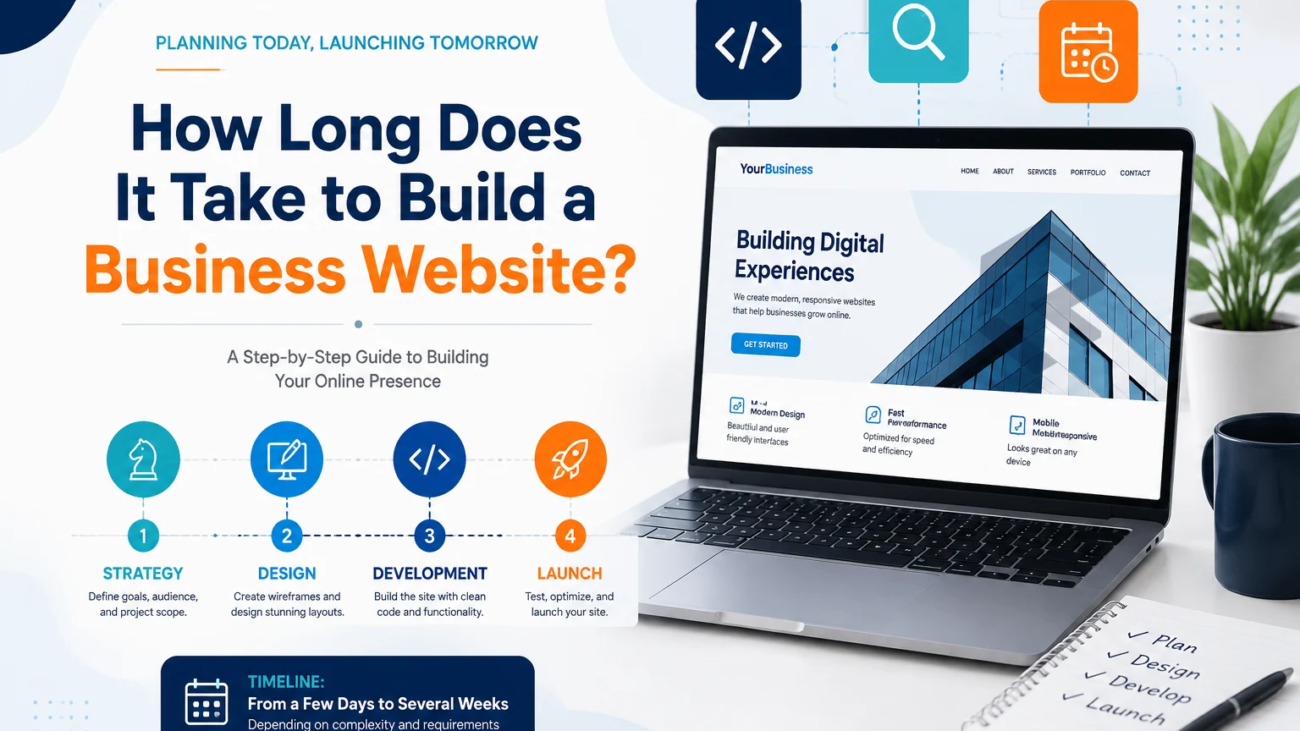
If you’re planning to launch or redesign your business website, one of the first questions you’ll ask is: “How long will this actually take?” The honest answer is — it depends. A simple one-page site can go live in a few days, while a fully custom, multilingual, e-commerce-ready website can take several weeks.
At Ramz Agency, we build professional business websites for entrepreneurs, clinics, and growing companies, and timeline is one of the most common questions clients ask before starting a project. In this guide, we’ll break down exactly what affects website build time, show a realistic timeline, and explain how our streamlined process helps you launch faster without sacrificing quality.
Quick Answer
On average, a professional business website takes between 2 to 6 weeks to design, develop, and launch — depending on complexity, content readiness, and revision cycles. Simple landing pages can be completed in 3–7 days, while advanced WooCommerce or multilingual sites may take 6–10 weeks.
Here is a realistic overview of how long different types of business websites typically take to build.content_copy
| Website Type | Typical Timeline | Pages/Complexity | Best For |
|---|---|---|---|
| One-page landing page | 3 to 7 days | Low complexity | Campaigns, services, new businesses |
| Basic brochure website | 2 to 4 weeks | 5 to 10 pages | Local businesses and professionals |
| Standard business website | 3 to 6 weeks | 10 to 20 pages | Growing service-based companies |
| Ecommerce website | 5 to 9 weeks | Products, payments, shipping | Retailers and online stores |
| Custom website or web app | 8 to 16+ weeks | Advanced functions and integrations | Businesses with unique requirements |
These are general estimates. A well-organized project with finalized content and fast feedback can move considerably faster. On the other hand, delayed approvals, unclear requirements, and late changes can extend even a simple website timeline.
Key Factors That Affect Website Development Time
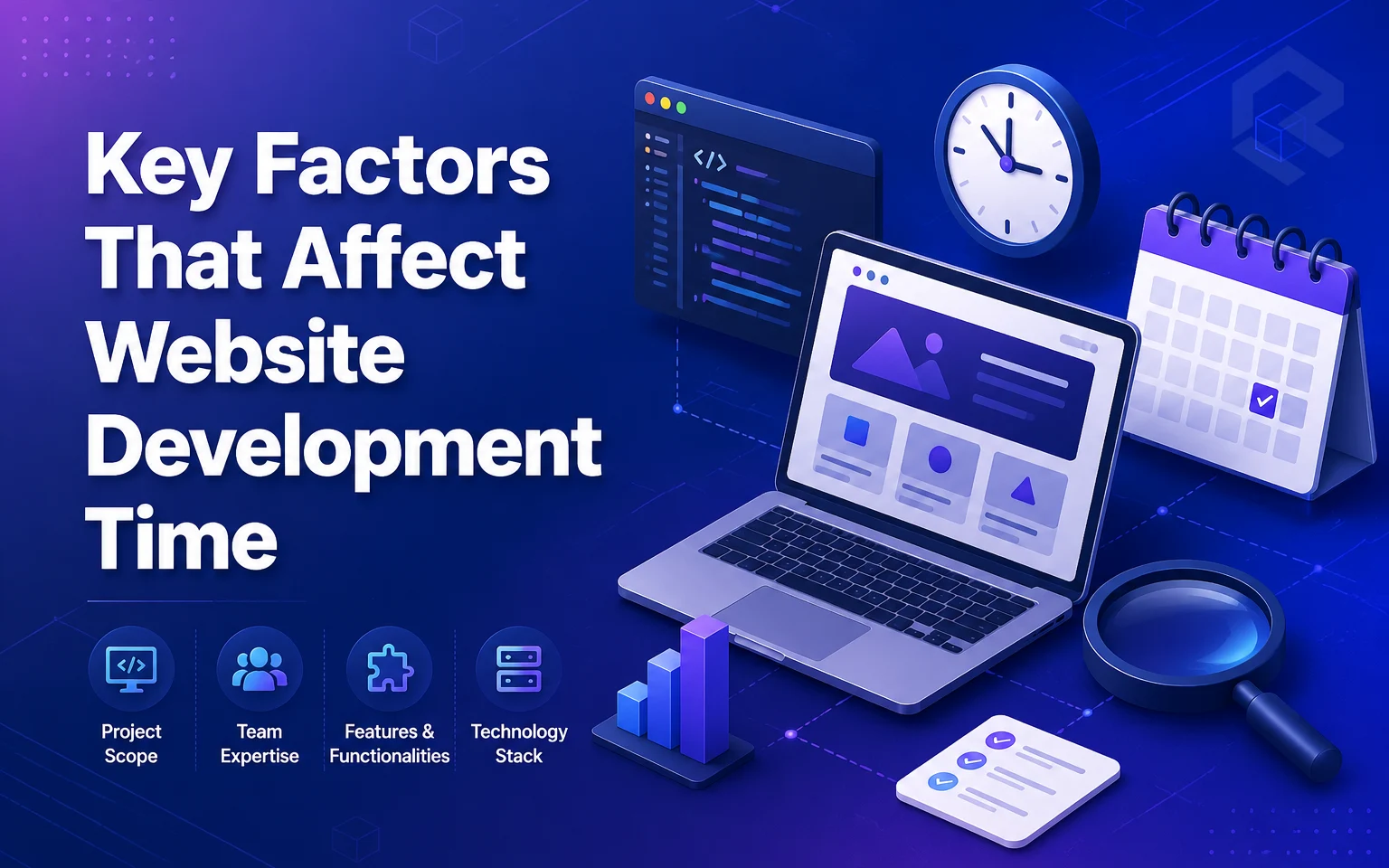
Several variables influence how long your project will take. Understanding them helps you plan realistically and avoid unnecessary delays.
1. Website Type and Complexity
A single landing page requires far less work than a full business website with multiple service pages, blog integration, and booking systems.
2. Content Readiness
If your text, images, and branding materials are ready before development starts, the process moves significantly faster. Missing content is the #1 cause of delays in web projects.
3. Design Customization
A fully custom design with unique layouts, animations, and a 3D/glassy aesthetic naturally takes longer than using a pre-built theme with light customization.
4. Functionality Requirements
Features like WooCommerce stores, booking systems (e.g., Bookly), multilingual support, or custom ACF-based content structures add development time.
5. Revision Rounds
The number of feedback rounds between the client and design team directly impacts the final delivery date.
6. Client Response Time
Fast approval on designs, content, and testing keeps the project on schedule. Slow feedback is one of the most common — and avoidable — causes of delay.
Read more: How Much Does a Professional Business Website Cost
The Typical Business Website Development Process
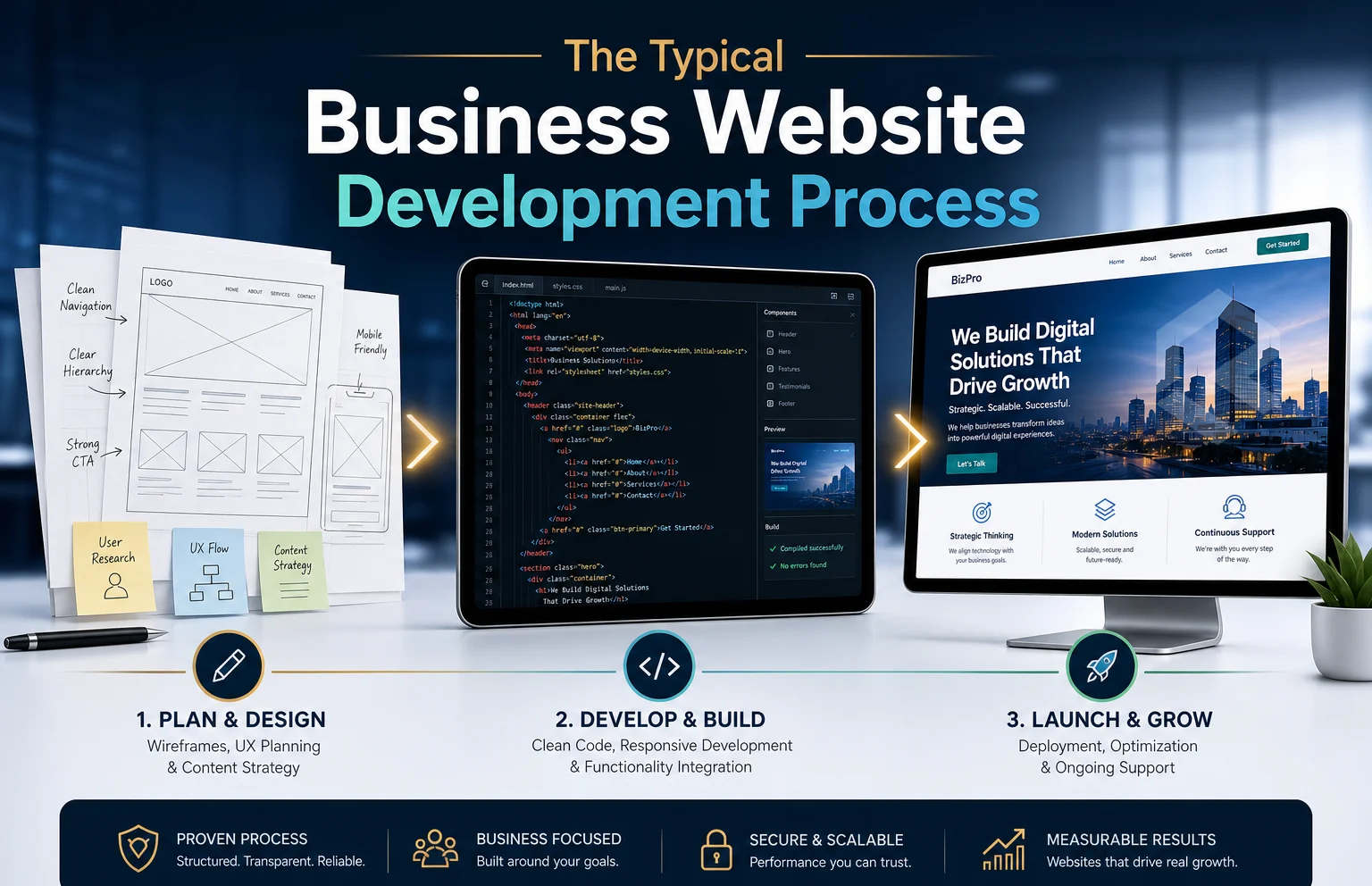
A professional website is more than a collection of pages. It should support your brand, explain your offer, build trust, and guide visitors toward contacting or buying from your business.
Here is what a typical website timeline looks like.
Week 1: Discovery, Goals, and Planning
The project begins by defining your target audience, services, primary calls to action, competitors, brand direction, and website goals.
For example, a local law firm may prioritize consultation requests, while a home renovation company may need quote requests, project galleries, and location-specific service pages.
During this stage, Ramzagency identifies the site structure and creates a clear plan for the pages, content, and functionality needed for launch.
Week 1 to 2: Content and Website Structure
Next, the website content is collected, organized, written, or refined. The navigation is finalized so visitors can easily find what they need.
This stage is especially important for search engine optimization. A clear site structure helps Google understand your services and helps users move naturally from discovery to action.
The website should not be created only for aesthetics. Every key page needs a purpose, whether that is building credibility, explaining a service, showing proof of results, or generating a lead.
Week 2 to 4: Design and Development
Once the direction is approved, the visual design and website build begin. This includes responsive layouts for desktop, tablet, and mobile devices.
A professional agency will ensure that your website reflects your business identity while making key information easy to scan. Important elements usually include prominent calls to action, service summaries, trust signals, testimonials, contact options, and clear navigation.
During development, Ramzagency also focuses on practical technical foundations, including performance, mobile usability, form functionality, and clean on-page SEO structure.
Week 4 to 5: Review, Testing, and Revisions
Before launch, the website is reviewed across modern browsers and devices. Forms are tested, links are checked, content is proofread, and technical settings are reviewed.
This is the time to make final revisions, not to redefine the entire project. Major additions late in the process can delay launch, so it is helpful to separate essential launch requirements from future enhancements.
Week 5 to 6: Launch and Post-Launch Checks
After final approval, the website is connected to your domain and launched. Analytics, search console tools, security certificates, backups, and redirects may also be configured depending on the project.
Launching is not the end of website growth. A strong business website should continue to evolve through new content, service pages, blog posts, conversion testing, SEO improvements, and performance monitoring.
How to Launch Your Website Faster
If speed is a priority, you do not need to sacrifice quality. You need a focused scope and a reliable process.
Start by defining the website’s primary goal. Is it to generate calls, quote requests, bookings, or online sales? A clear goal prevents unnecessary pages and features from delaying the launch.
Next, choose your essential pages. Most businesses can launch effectively with a homepage, service pages, an about page, testimonials or portfolio content, and a contact page. Add advanced sections after the core site is live.
You should also designate one person to collect feedback and approve decisions. This reduces conflicting requests and keeps communication simple.
Finally, work with a website agency that understands both design and business outcomes. A website that launches quickly but fails to communicate your value is not a success. The best result is a fast, professional site built to earn trust and convert visitors.
How Ramz Agency Speeds Up the Development Process
We’ve refined our workflow to reduce delays while maintaining high design and performance standards:
- Pre-built component library — Reusable, tested design blocks (cards, buttons, sections) speed up development without sacrificing a custom look.
- ACF Repeater-based structures — Flexible, editable content sections that reduce back-and-forth during content updates.
- Clear onboarding forms — We collect branding assets, content, and preferences upfront to avoid mid-project delays.
- Fixed revision rounds — A structured feedback process (2–3 rounds) keeps the timeline predictable.
- Performance-first development — Optimized loading (including booking plugins like Bookly) from day one, reducing late-stage speed fixes.
This process is exactly how we deliver Professional Business Websites Starting from $479 — fast, affordable, and built to convert.
FAQ: Business Website Timelines
Yes. A simple one-page website or landing page can take 3 to 7 days when your content, logo, images, and approvals are ready.
The usual reasons are delayed content, slow feedback, extra pages, new feature requests, or too many people approving changes. The practical solution is to decide what is essential for launch and schedule non-essential features for phase two.
Prepare your logo, business details, services, contact information, photos, testimonials, social links, and examples of websites you like.
Launch a professional core website first, then add blog posts, extra service pages, and advanced features later. This helps you start receiving leads sooner.
No. A focused project can be fast and high quality when content is ready and the scope is clear. Testing, mobile design, security, and SEO basics should still be included.
Yes. Most WordPress websites allow you to update text, images, services, and blog content. Ask for admin access and basic training at handover.
Google may discover a new website within days or weeks. Ranking on the first page usually takes longer and depends on competition, SEO, content, local relevance, and authority.
Ask about price, delivery time, included pages, revisions, mobile design, SEO setup, ownership, support, hosting, and what happens after launch.
Because each language requires translated content, RTL/LTR layout testing (important for Arabic and Persian), and separate SEO metadata per language.
Ready to discuss your website? Contact Ramzagency to get a clear scope, realistic timeline, and website solution tailored to your business.
![How Much Does a Professional Business Website Cost [2026]](https://ramzagency.com/wp-content/uploads/2026/08/How-Much-Does-a-Professional-Business-Website-Cost-2026-1300x731.webp)