How Long Does It Take to Build a Business Website2

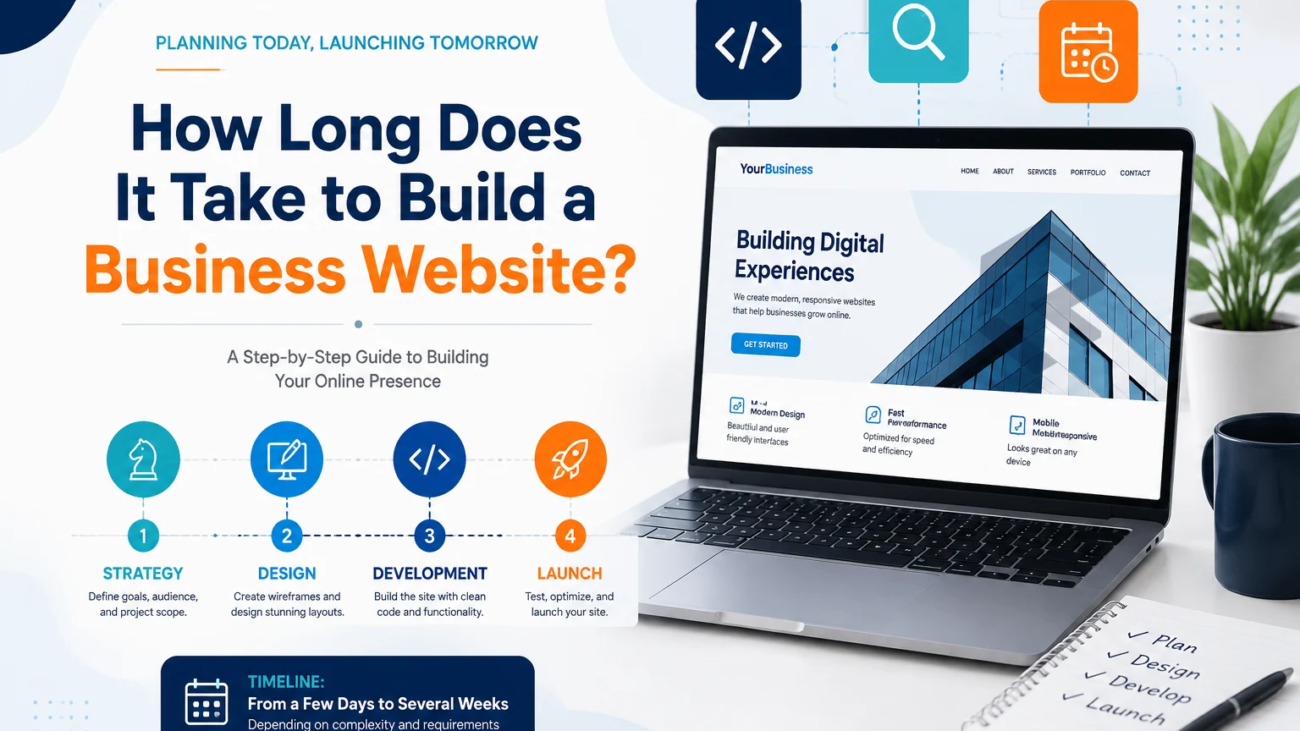
How Long Does It Take to Build a Business Website?

If you’re planning to launch or redesign your business website, one of the first questions you’ll ask is: “How long will this actually take?” The honest answer is — it depends. A simple one-page site can go live in a few days, while a fully custom, multilingual, e-commerce-ready website can take several weeks.

At Ramz Agency, we build professional business websites for entrepreneurs, clinics, and growing companies, and timeline is one of the most common questions clients ask before starting a project. In this guide, we’ll break down exactly what affects website build time, show a realistic timeline, and explain how our streamlined process helps you launch faster without sacrificing quality.

Quick Answer

On average, a professional business website takes between 2 to 6 weeks to design, develop, and launch — depending on complexity, content readiness, and revision cycles. Simple landing pages can be completed in 3–7 days, while advanced WooCommerce or multilingual sites may take 6–10 weeks.

Here is a realistic overview of how long different types of business websites typically take to build.content_copy

Website TypeTypical TimelinePages/ComplexityBest For
One-page landing page3 to 7 daysLow complexityCampaigns, services, new businesses
Basic brochure website2 to 4 weeks5 to 10 pagesLocal businesses and professionals
Standard business website3 to 6 weeks10 to 20 pagesGrowing service-based companies
Ecommerce website5 to 9 weeksProducts, payments, shippingRetailers and online stores
Custom website or web app8 to 16+ weeksAdvanced functions and integrationsBusinesses with unique requirements

These are general estimates. A well-organized project with finalized content and fast feedback can move considerably faster. On the other hand, delayed approvals, unclear requirements, and late changes can extend even a simple website timeline.

Key Factors That Affect Website Development Time
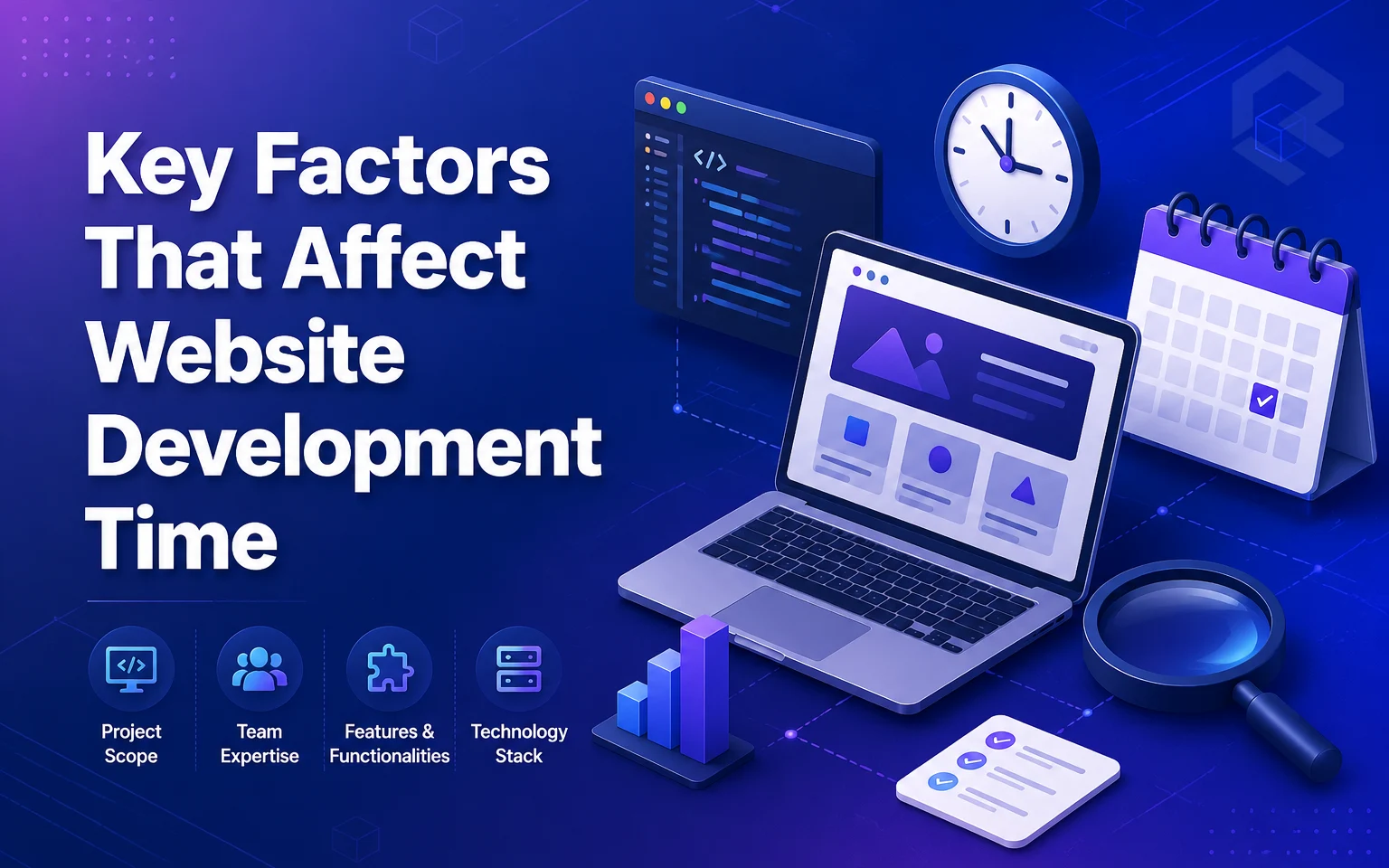
Key Factors That Affect Website Development Time

Several variables influence how long your project will take. Understanding them helps you plan realistically and avoid unnecessary delays.

1. Website Type and Complexity

A single landing page requires far less work than a full business website with multiple service pages, blog integration, and booking systems.

2. Content Readiness

If your text, images, and branding materials are ready before development starts, the process moves significantly faster. Missing content is the #1 cause of delays in web projects.

3. Design Customization

A fully custom design with unique layouts, animations, and a 3D/glassy aesthetic naturally takes longer than using a pre-built theme with light customization.

4. Functionality Requirements

Features like WooCommerce stores, booking systems (e.g., Bookly), multilingual support, or custom ACF-based content structures add development time.

5. Revision Rounds

The number of feedback rounds between the client and design team directly impacts the final delivery date.

6. Client Response Time

Fast approval on designs, content, and testing keeps the project on schedule. Slow feedback is one of the most common — and avoidable — causes of delay.

Read more: How Much Does a Professional Business Website Cost

The Typical Business Website Development Process
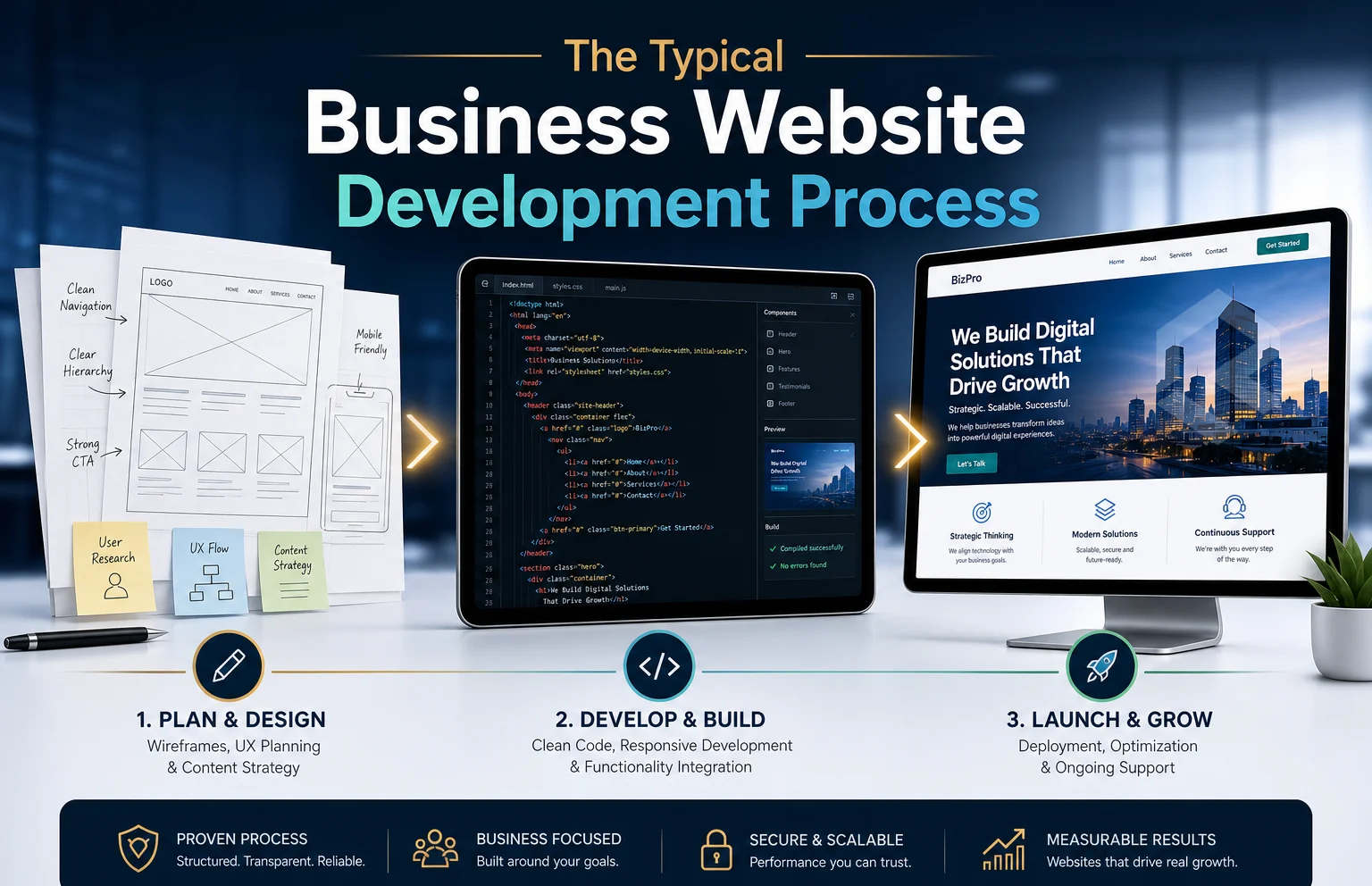
The Typical Business Website Development Process

A professional website is more than a collection of pages. It should support your brand, explain your offer, build trust, and guide visitors toward contacting or buying from your business.

Here is what a typical website timeline looks like.

Week 1: Discovery, Goals, and Planning

The project begins by defining your target audience, services, primary calls to action, competitors, brand direction, and website goals.

For example, a local law firm may prioritize consultation requests, while a home renovation company may need quote requests, project galleries, and location-specific service pages.

During this stage, Ramzagency identifies the site structure and creates a clear plan for the pages, content, and functionality needed for launch.

Week 1 to 2: Content and Website Structure

Next, the website content is collected, organized, written, or refined. The navigation is finalized so visitors can easily find what they need.

This stage is especially important for search engine optimization. A clear site structure helps Google understand your services and helps users move naturally from discovery to action.

The website should not be created only for aesthetics. Every key page needs a purpose, whether that is building credibility, explaining a service, showing proof of results, or generating a lead.

Week 2 to 4: Design and Development

Once the direction is approved, the visual design and website build begin. This includes responsive layouts for desktop, tablet, and mobile devices.

A professional agency will ensure that your website reflects your business identity while making key information easy to scan. Important elements usually include prominent calls to action, service summaries, trust signals, testimonials, contact options, and clear navigation.

During development, Ramzagency also focuses on practical technical foundations, including performance, mobile usability, form functionality, and clean on-page SEO structure.

Week 4 to 5: Review, Testing, and Revisions

Before launch, the website is reviewed across modern browsers and devices. Forms are tested, links are checked, content is proofread, and technical settings are reviewed.

This is the time to make final revisions, not to redefine the entire project. Major additions late in the process can delay launch, so it is helpful to separate essential launch requirements from future enhancements.

Week 5 to 6: Launch and Post-Launch Checks

After final approval, the website is connected to your domain and launched. Analytics, search console tools, security certificates, backups, and redirects may also be configured depending on the project.

Launching is not the end of website growth. A strong business website should continue to evolve through new content, service pages, blog posts, conversion testing, SEO improvements, and performance monitoring.

How to Launch Your Website Faster

If speed is a priority, you do not need to sacrifice quality. You need a focused scope and a reliable process.

Start by defining the website’s primary goal. Is it to generate calls, quote requests, bookings, or online sales? A clear goal prevents unnecessary pages and features from delaying the launch.

Next, choose your essential pages. Most businesses can launch effectively with a homepage, service pages, an about page, testimonials or portfolio content, and a contact page. Add advanced sections after the core site is live.

You should also designate one person to collect feedback and approve decisions. This reduces conflicting requests and keeps communication simple.

Finally, work with a website agency that understands both design and business outcomes. A website that launches quickly but fails to communicate your value is not a success. The best result is a fast, professional site built to earn trust and convert visitors.

How Ramz Agency Speeds Up the Development Process
How Ramz Agency Speeds Up the Website Development Process

We’ve refined our workflow to reduce delays while maintaining high design and performance standards:

  • Pre-built component library — Reusable, tested design blocks (cards, buttons, sections) speed up development without sacrificing a custom look.
  • ACF Repeater-based structures — Flexible, editable content sections that reduce back-and-forth during content updates.
  • Clear onboarding forms — We collect branding assets, content, and preferences upfront to avoid mid-project delays.
  • Fixed revision rounds — A structured feedback process (2–3 rounds) keeps the timeline predictable.
  • Performance-first development — Optimized loading (including booking plugins like Bookly) from day one, reducing late-stage speed fixes.

This process is exactly how we deliver Professional Business Websites Starting from $479 — fast, affordable, and built to convert.

FAQ: Business Website Timelines

Can a business website be built in less than a week?

Yes. A simple one-page website or landing page can take 3 to 7 days when your content, logo, images, and approvals are ready.

Why is my website taking longer than expected?

The usual reasons are delayed content, slow feedback, extra pages, new feature requests, or too many people approving changes. The practical solution is to decide what is essential for launch and schedule non-essential features for phase two.

What do I need before the website project starts?

Prepare your logo, business details, services, contact information, photos, testimonials, social links, and examples of websites you like.

Should I launch a small website or wait for everything?

Launch a professional core website first, then add blog posts, extra service pages, and advanced features later. This helps you start receiving leads sooner.

Does a faster website build mean lower quality?

No. A focused project can be fast and high quality when content is ready and the scope is clear. Testing, mobile design, security, and SEO basics should still be included.

How many website revisions are normally included?

Yes. Most WordPress websites allow you to update text, images, services, and blog content. Ask for admin access and basic training at handover.

How soon will my website appear on Google?

Google may discover a new website within days or weeks. Ranking on the first page usually takes longer and depends on competition, SEO, content, local relevance, and authority.

What should I ask before hiring a web design agency?

Ask about price, delivery time, included pages, revisions, mobile design, SEO setup, ownership, support, hosting, and what happens after launch.

Why do multilingual websites take longer?

Because each language requires translated content, RTL/LTR layout testing (important for Arabic and Persian), and separate SEO metadata per language.

Ready to discuss your website? Contact Ramzagency to get a clear scope, realistic timeline, and website solution tailored to your business.

How Much Does a Professional Business Website Cost [2026]

How Much Does a Professional Business Website Cost [2026]

If you’re planning to launch or redesign your business website in 2026, one question comes up before anything else: how much does it actually cost?

The honest answer is: it depends. A simple one-page site and a fully custom e-commerce platform don’t belong in the same budget category. In this guide, we break down real 2026 pricing, the factors that drive cost up or down, and how to choose the right investment level for your business — without overpaying or underinvesting.

For most small and growing companies, a professional business website in 2026 costs from $480 up to $8,000+, depending on the number of pages, design requirements, functionality, content, and ongoing support.

At the lower end, a streamlined brochure website can provide a credible online presence, service pages, lead forms, mobile responsiveness, and search-engine-ready foundations. At the higher end, businesses may need custom design systems, ecommerce features, booking tools, integrations, copywriting, advanced SEO, or multilingual content.

The important question is not simply, “How much does a website cost?” It is: “What does my business need the website to accomplish?”

A well-built website should help establish trust, explain your offer clearly, attract qualified traffic, and turn visitors into enquiries or sales. That is why RamzAgency offers Professional Business Websites Starting from $480: a practical entry point for businesses that want a credible, conversion-focused website without paying enterprise-level prices.

What Determines the Cost of a Professional Website in 2026?

What Determines the Cost of a Professional Website in 2026?

Website pricing isn’t random — it’s built from a combination of measurable factors. Understanding them helps you budget realistically and avoid surprise costs later.

1. Design complexity

A template-based design with light customization costs far less than a fully custom UI built around your brand identity, animations, and unique layout system.

2. Number of pages and content structure

More pages require more planning, design, development, and content. A simple five-page website costs less than a 25-page website with separate pages for every service, location, industry, and case study.

For example, a local plumbing company may start with five to seven pages. A construction company serving several cities may need dedicated location pages to compete in local search results.

3. Functionality and features

Booking systems, membership areas, multi-language support (e.g., Arabic/English), payment gateways, and custom dashboards all add development time.

4. E-commerce requirements

An ecommerce website usually costs more than a standard business website because it needs product pages, categories, checkout functionality, payment processing, shipping rules, tax settings, customer accounts, and inventory management.

A small online store with a limited number of products may be relatively affordable. A store with hundreds of products, subscriptions, custom configurations, or complex integrations will require a larger budget.

5. SEO and content strategy

A site built with proper on-page SEO, schema markup, and E-E-A-T-focused content (especially important for medical, legal, and finance niches) costs more upfront but saves money on paid ads long-term.

More advanced SEO services can include:

  • Keyword research and competitor analysis
  • Service and location landing pages
  • Technical SEO audits
  • Internal linking strategy
  • Blog content planning
  • Local SEO and Google Business Profile optimization
  • Ongoing link building and content production

A website can be built for SEO from day one, but ranking on Google’s first page often requires continued optimization and content work after launch.

6. Maintenance and support

Ongoing updates, backups, security monitoring, and hosting management are often billed separately — but they’re essential for site longevity.

The Average Cost of a Professional Business Website in 2026

The Average Cost of a Professional Business Website in 2026

Website pricing varies substantially because no two businesses have the same goals. A local service business may need five well-structured pages and a contact form, while a growing company may require dozens of pages, CMS access, content strategy, SEO landing pages, and third-party integrations.

Here is a general guide to professional business website costs in 2026:

Website TypePrice Range (2026)Our Offer (20% Less)Typical FeaturesBest For
Starter Business Site$600 – $1,200$480 – $9603–5 pages, responsive design, contact form, basic SEONew businesses, personal brands, local services
Standard Business Website$1,200 – $3,000$960 – $2,4005–10 pages, custom design, blog, on-page SEO, ACF-based content managementGrowing businesses, clinics, service providers
Multilingual / Advanced Site$2,500 – $5,000$2,000 – $4,000Arabic/English structure, advanced SEO, custom sections, booking integrationMedical practices, agencies, regional businesses
E-commerce Website (WooCommerce)$3,000 – $8,000+$2,400 – $6,400+Product catalog, payment gateway, cart/checkout, inventory managementOnline stores, product-based businesses
Custom Web Application$8,000 – $20,000+$6,400 – $16,000+Custom-coded features, dashboards, API integrations, MVC/OOP architectureSaaS platforms, enterprise tools, complex workflows

For many small businesses, the most effective range is between $480 and $2,000 with our current 20% offer (originally $600 – $2,500). This budget can cover the essential elements needed to look professional, make a strong first impression, and generate leads.

A website does not need every possible feature to perform well. It needs the right structure, message, design, and calls to action for your target customers.

How to Choose the Right Website Budget

The best website budget is based on your goals, not on a random industry average. Start by defining what success looks like.

Do you need more phone calls? Quote requests? Appointment bookings? Online sales? Better credibility when prospects search for your company? A stronger platform for SEO and content marketing?

Then consider these questions:

  • How many services do you need to explain?
  • Do you need separate location pages?
  • Do you have brand assets, images, and written content ready?
  • Will you need ecommerce, bookings, or other integrations?
  • Do you want to update the website yourself?
  • Is SEO a core part of your growth strategy?
  • Will the website need to scale as your business expands?

A good agency will help you prioritize. You may not need to launch every page and feature at once. Starting with the highest-impact pages allows you to establish a professional presence quickly, then add new content and functionality as your business grows.

Is $480 Enough for a Professional Website?

Yes, $480 can be enough for a professional starter website when the project has a focused scope. It is particularly suitable for local businesses, consultants, contractors, new service providers, and small companies that need a clean, credible website with essential functionality.

A $480 website is not likely to include advanced custom software, extensive ecommerce functionality, 30 pages of SEO content, or highly complex integrations. But it can provide a strong foundation: a professional design, core business information, responsive layouts, lead capture, and basic SEO setup.

The key is to work with an agency that understands how to make a smaller budget work effectively. At RamzAgency, we help businesses launch websites that focus on what matters most: communicating value, building trust, and encouraging customers to get in touch.

Invest in a Website That Supports Your Business Growth

Invest in a Website That Supports Your Business Growth

A professional business website in 2026 can cost anywhere from $600 to several thousand dollars, depending on design complexity, features, and scope. The right investment depends on your business goals, required functionality, and the role your website plays in your overall marketing strategy.

For many businesses, starting with a focused, high-quality website is the smartest decision. You can launch with the essential pages and conversion features, then expand through SEO content, new service pages, local landing pages, ecommerce, or integrations as demand grows.

If you need a professional online presence that looks credible, works on every device, and is built to support your business goals, RamzAgency can help.

How Ramz Agency Approaches Website Pricing

At Ramz Agency, we build websites using the right tool for each project — whether that’s a custom WordPress theme or a page builder like Elementor. What matters is the outcome: a site that performs, ranks, and serves your business goals.

Our approach focuses on:

  • Performance – optimized loading speed regardless of the build method
  • SEO-ready structure – proper schema, semantic HTML, and content hierarchy from day one
  • Multilingual capability – Arabic, English, and other languages without compromising SEO
  • Scalable architecture – built to grow with your business

Custom-coded themes offer more flexibility and performance headroom; page builders offer faster delivery and easier client management. We recommend based on your budget, timeline, and long-term needs.

How to Get the Best Value for Your Website Budget

  1. Define your goals first — lead generation, bookings, sales, or brand credibility each require different features.
  2. Prioritize SEO from day one — retrofitting SEO later costs more than building it in from the start.
  3. Don’t over-build early — start with what you need now, and choose a partner who can scale the site later.
  4. Ask about post-launch support — a website without maintenance becomes a liability within a year.
  5. Compare total cost of ownership, not just the upfront price — hosting, updates, and SEO add up over time.

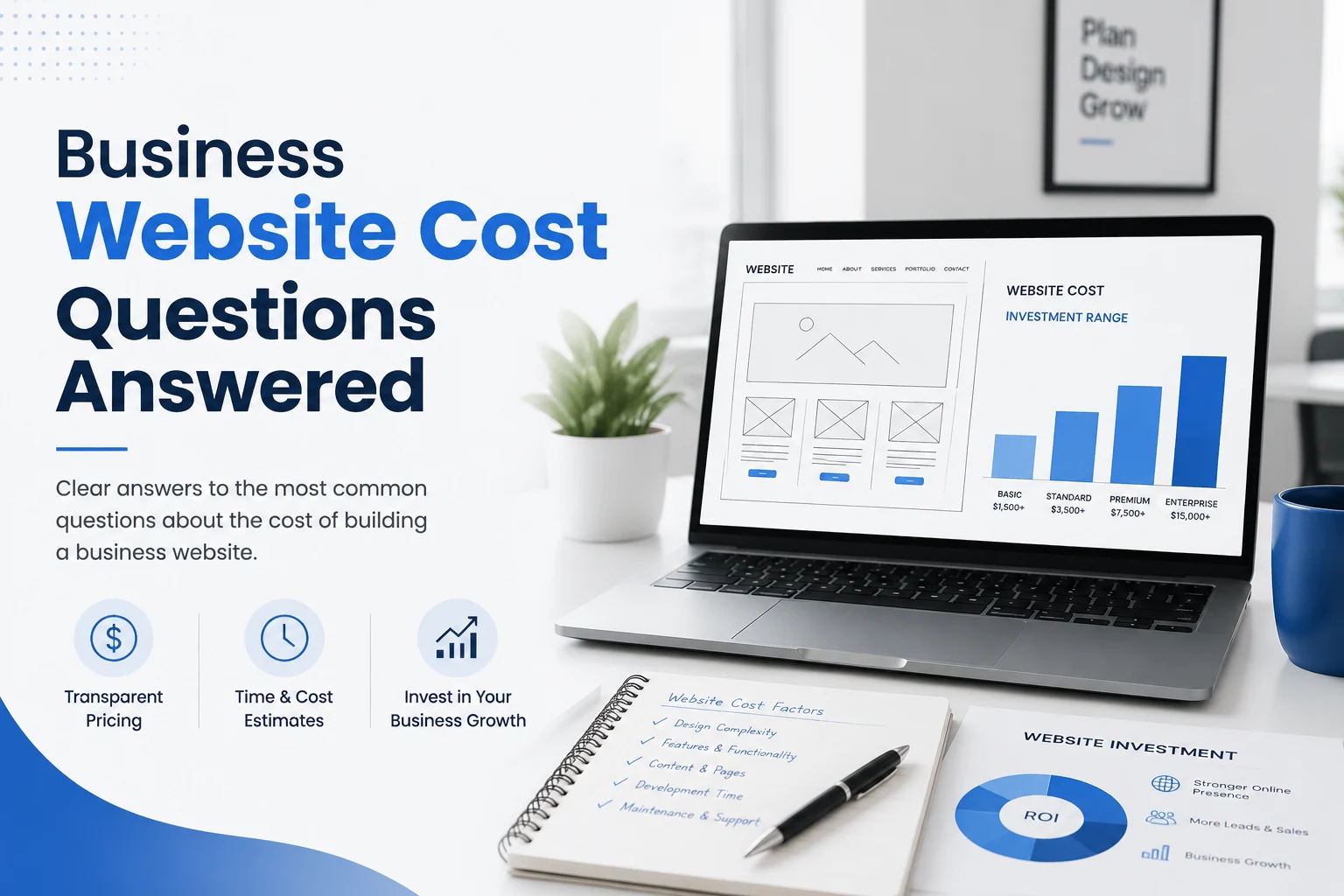
Business Website Cost Questions Answered

Business Website Cost Questions Answered
Can I really get a professional website starting from $480?

Yes. A $480 website is usually a starter professional website with the essential pages, mobile-friendly design, contact forms, and basic SEO setup.

What is included in a basic business website package?

A basic package often includes homepage design, service pages, about page, contact page, mobile responsiveness, basic SEO, and lead capture forms.

Why do some websites cost much more than others?

Prices increase when a website needs custom design, copywriting, advanced functionality, ecommerce, integrations, multilingual setup, or stronger SEO work.

How long does it take to build a professional website?

Most small business websites take 1 to 4 weeks, depending on the number of pages, content readiness, and revision rounds.

Will my website be mobile-friendly?

A professional website should always be fully responsive, meaning it works properly on mobile phones, tablets, and desktop screens.

Is SEO included in the website price?

Basic SEO is usually included in a professional build, such as title tags, meta descriptions, proper headings, image optimization, and clean page structure.

Can I update the website myself after it is launched?

Yes, most professional websites are built on a content management system so you can edit text, add pages, or update images later.

What is the best website option for a small business?

For most small businesses, a focused website with 4 to 8 core pages, strong messaging, mobile design, and lead generation features is the best starting point.